Every note a Plan creates carries a lock, called its accumulator. The lock is written when the Plan is drafted, before the depositor signs anything. The pool checks the lock every time someone spends the note. The automation service holds the key that spends these notes. The key lets the service run the Plan, and the locks stop it from sending the tokens anywhere else.

Pay only the planned account

A payout note is locked to one Stellar account, one asset, and one amount. The pool accepts a withdrawal of that note only when all three match. A withdrawal to any other account is rejected, and the tokens stay in the pool.
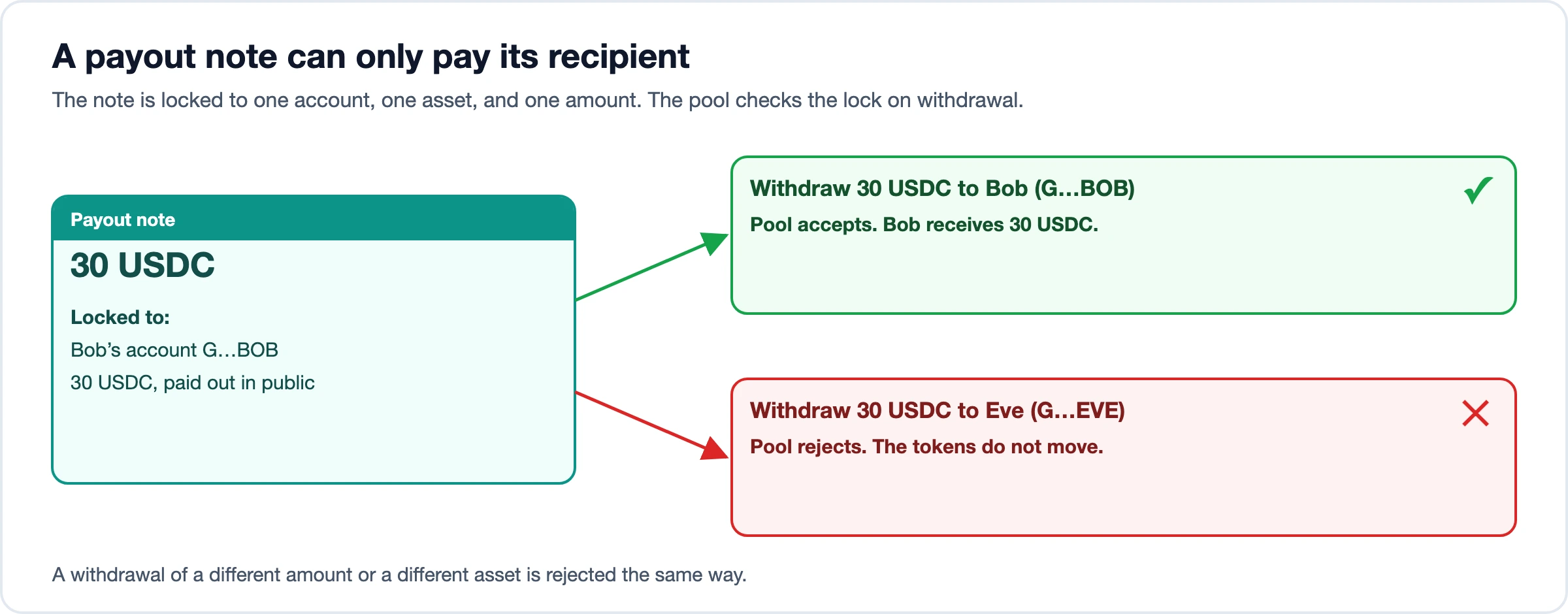
A 30 USDC payout note locked to Bob's account. A withdrawal to Bob is accepted. A withdrawal to Eve is rejected and the tokens do not move

Move only into the planned notes

A note that carries value forward, such as a Remainder, is locked to the exact notes the next Step creates. The pool accepts the transfer only when it creates those notes. A transfer into any other note, including a note the service owns, is rejected.
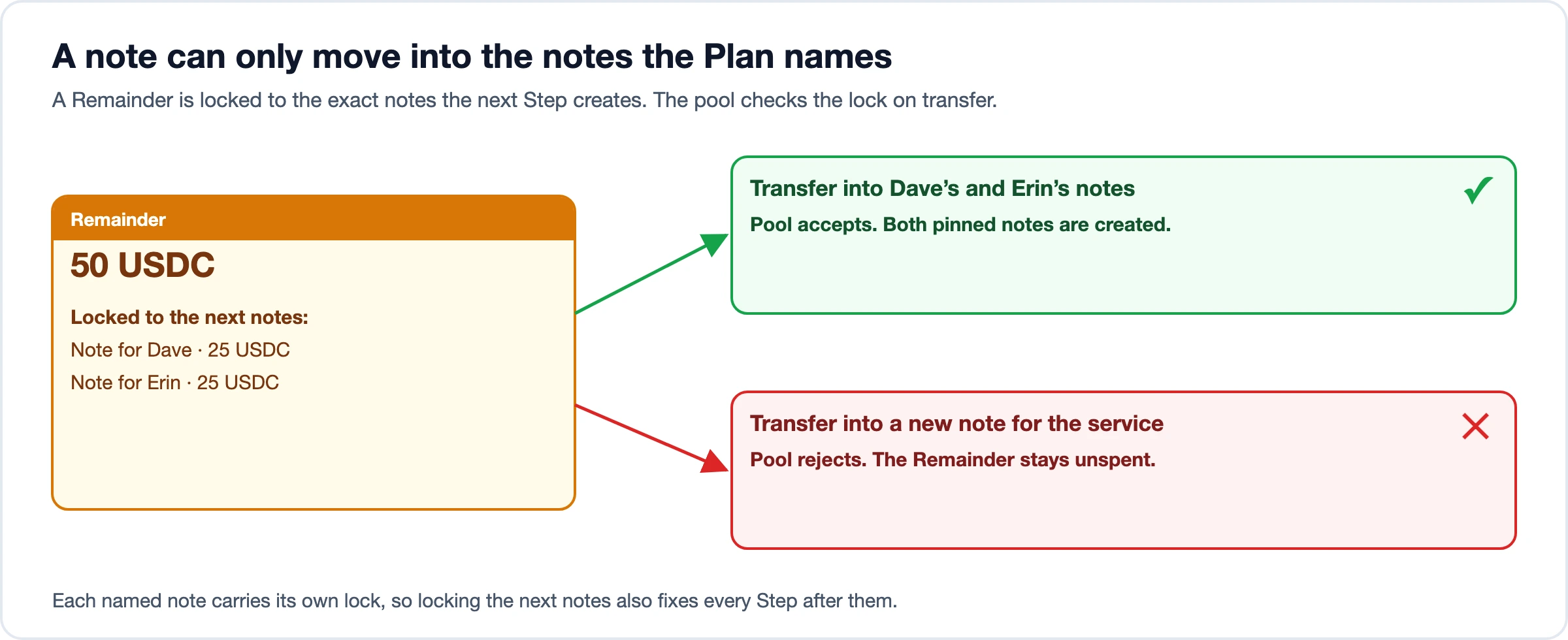
A 50 USDC Remainder locked to notes for Dave and Erin. A transfer that creates those two notes is accepted. A transfer into a new note for the service is rejected
Each of the next notes carries its own lock. So the first lock fixes the whole route, all the way to the last payout.

What the locks leave open

Locks fix where tokens go. They do not fix when. The service decides when each Step runs, and it pays fees from each Step’s Free tokens. See Trust assumptions. When the depositor confirms a Plan, the service checks that every lock matches the Step that spends the note. It refuses a Plan with a lock that does not match.