

On-chain transaction and indexing flow
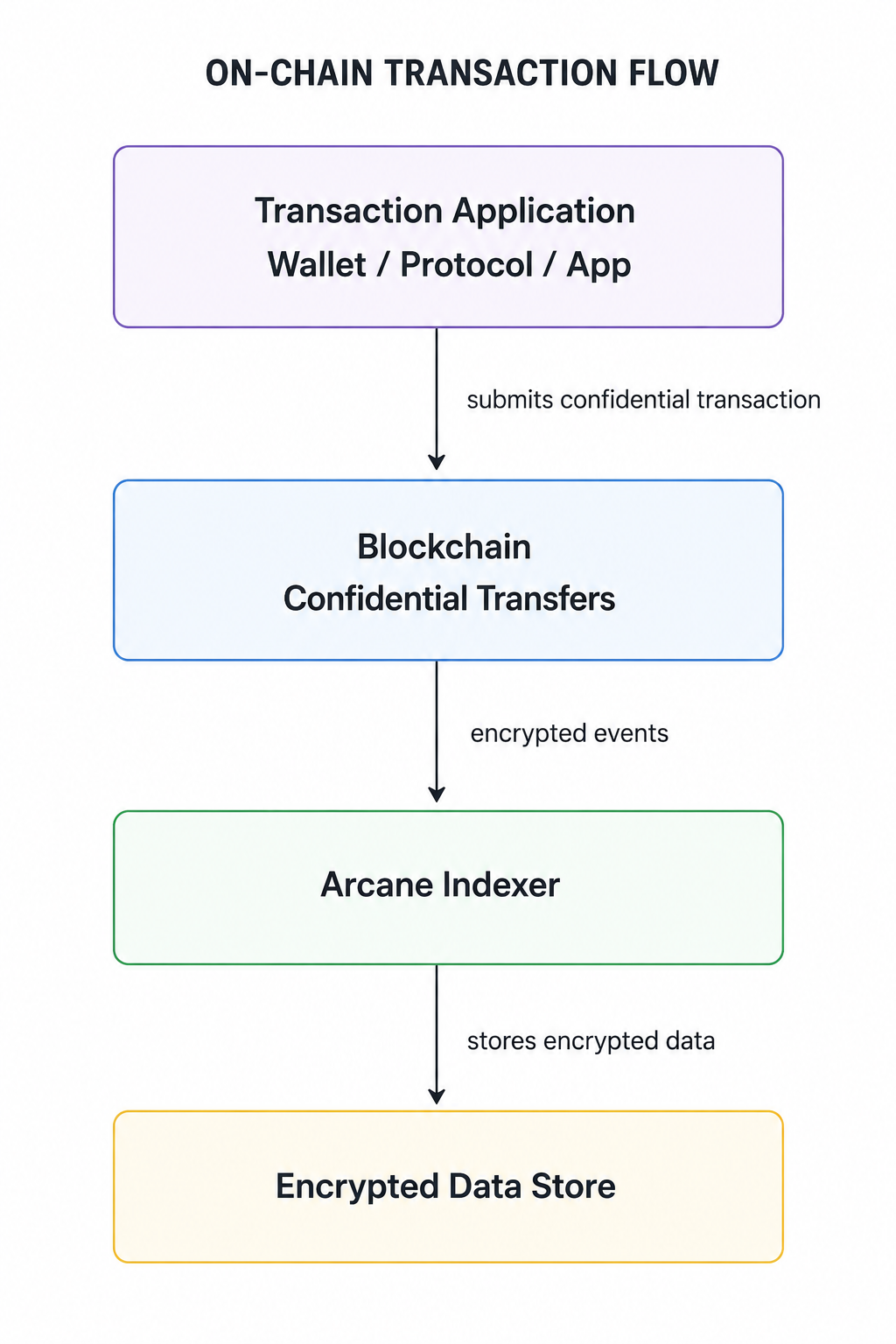
On-chain transaction flow
1
Your application submits the transaction
Your wallet, protocol, or application constructs, signs, and submits the
confidential transaction directly to the blockchain.
2
The privacy stack executes it
The supported blockchain or privacy stack validates the transaction and
produces encrypted state, events, or audit records.
3
Arcane indexes encrypted evidence
The Arcane Indexer observes supported records and extracts encrypted
payloads with the metadata needed to locate and interpret them.
4
Arcane stores the encrypted records
The encrypted data store persists the records without receiving disclosure
key material or confidential plaintext.
Authorization and protected-key-access flow
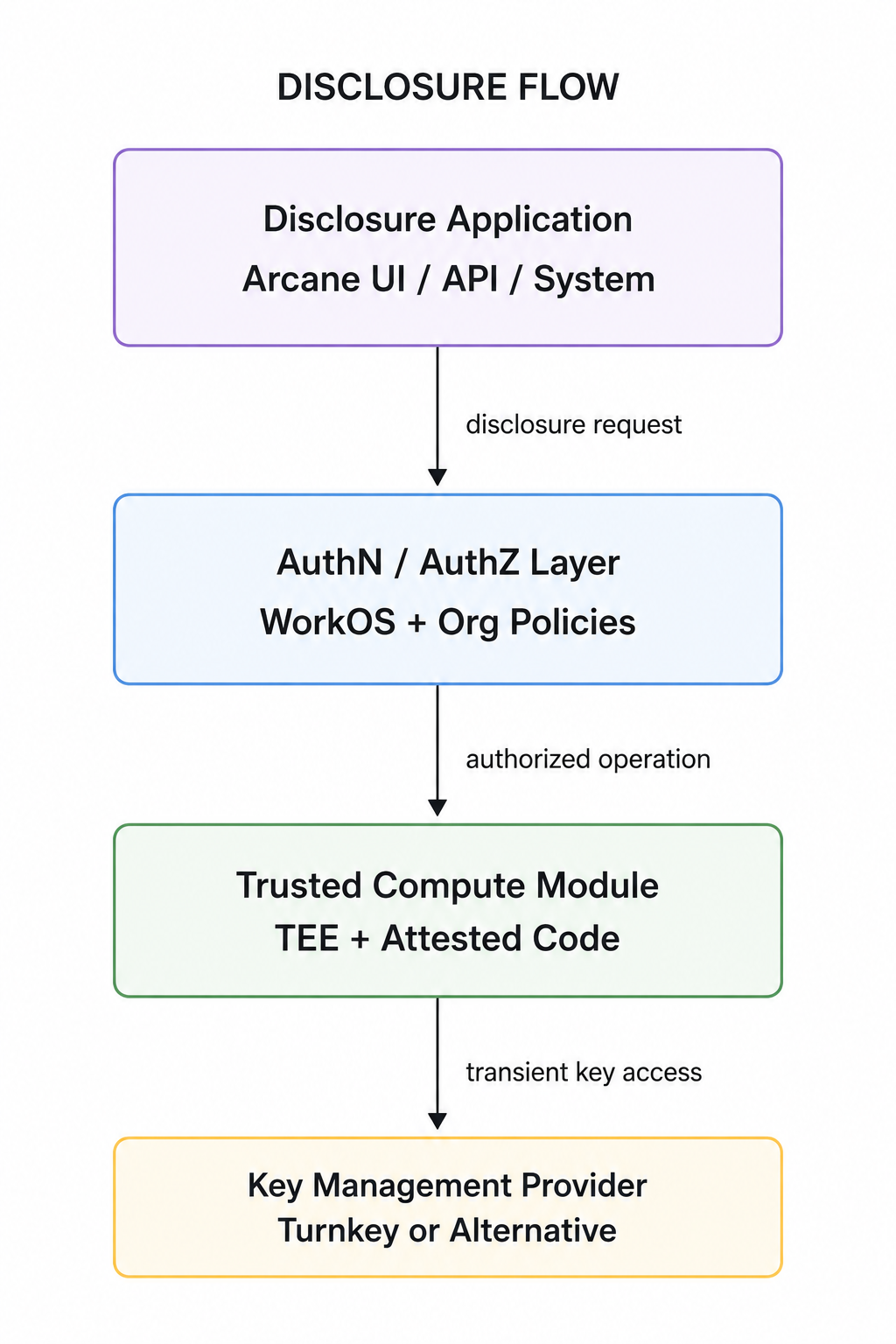
Disclosure authorization and protected-key-access flow
Authorized disclosure sequence
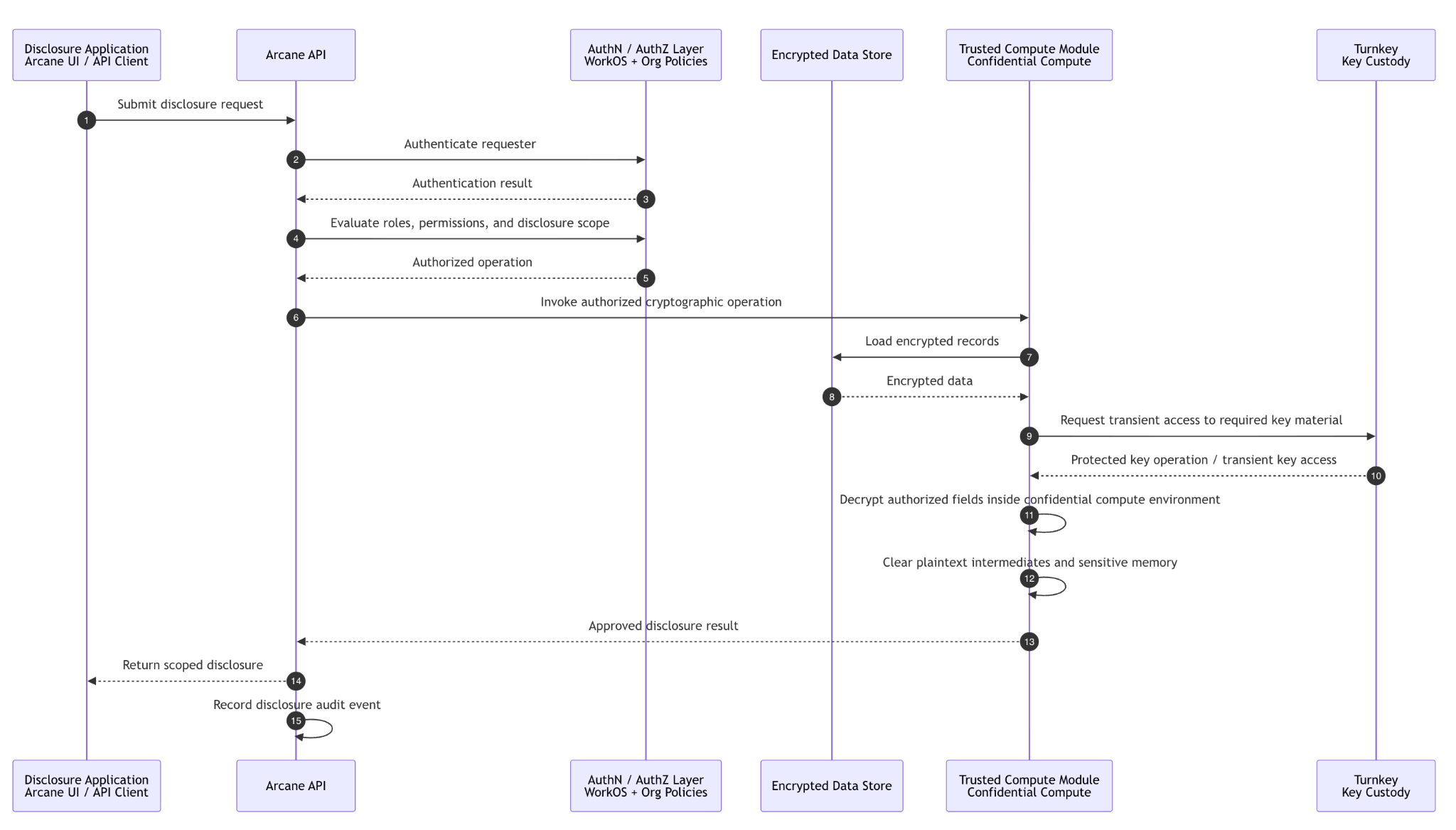
Authorized disclosure sequence
1
Submit the request
An authorized user or system requests disclosure through the Arcane UI or
API. The request identifies the protected data and requested scope.
2
Authenticate and authorize
Arcane authenticates the requester. It then evaluates organization roles,
permissions, policy, and the approved disclosure scope.
3
Load encrypted records
Arcane loads only the relevant ciphertext from the encrypted data store. It
forwards the authorized operation and scoped encrypted records to the
Trusted Compute Module.
4
Obtain protected key access
The key-management provider permits the approved trusted workload to use the
required disclosure key for this operation. The requester and ordinary
Arcane services do not receive the key.
5
Perform the protected operation
Approved code parses the network-specific ciphertext and performs the
required decryption or reconstruction inside the trusted environment.
6
Return the approved result
Arcane returns only the fields allowed by the authorization decision. It
does not persist the returned plaintext during normal operation.
7
Clear and record
The Trusted Compute Module clears sensitive intermediate values after the
operation. Arcane records metadata about the disclosure for auditability.
A user, User API client, customer backend, or ordinary Arcane service never
receives a disclosure private key. The authorized requester receives only the
approved disclosure result.